
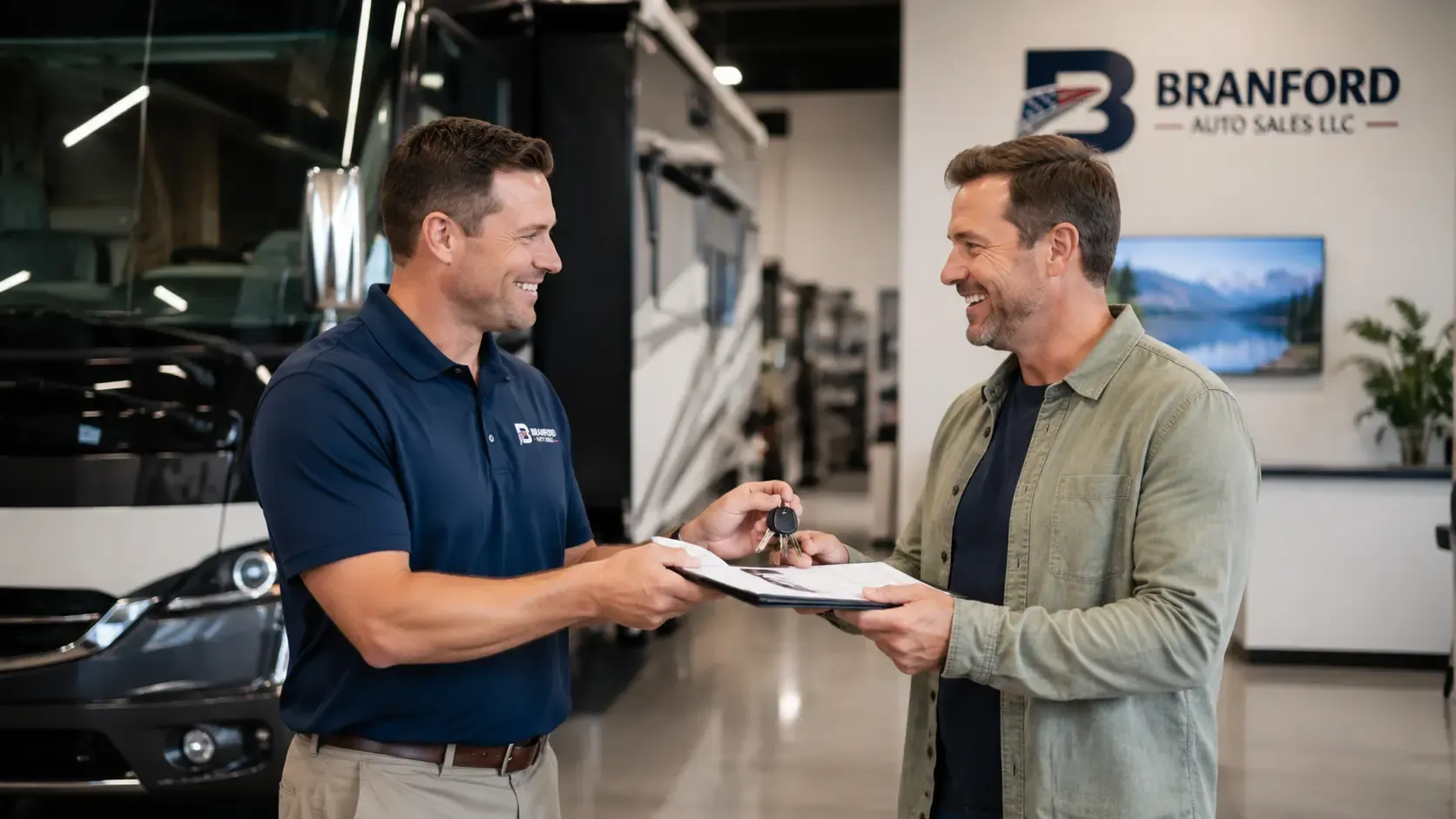
Why Buying From an RV Dealer Can Be Safer Than a Private Seller?
Why Buying From an RV Dealer Can Be Safer Than a Private Seller
Buying a used RV is a major decision. Whether you are looking for a compact Class B camper van, a family-friendly Class C, or a luxury Class A diesel motorhome, you want to feel confident that you understand what you are purchasing.
Private-party sales can sometimes look attractive because of the lower upfront price. However, purchasing through a reputable RV dealer can provide important advantages: clearer paperwork, a more organized buying process, professional preparation, delivery options, and support after the sale.
A dealer should never replace your own inspection or research—but the right dealership can make the process safer and easier to manage.
1. A More Organized Inspection and Preparation Process
A private seller may know their RV well, but they may not have the time, equipment, or experience to prepare it for a new owner.
A professional dealership can review the RV before listing it, inspect major systems, and address items that need attention. Depending on the unit, that can include checking:
- Engine and generator operation
- Tires, batteries, and visible chassis components
- Slide-outs and leveling systems
- Heating and air conditioning
- Plumbing and water systems
- Appliances and electrical systems
- Roof condition and visible seal concerns
- Storage compartments, locks, lights, and safety features
This does not mean a used RV will be perfect or free from future maintenance. It does mean the buyer has a more structured starting point than purchasing an RV exactly as it sits in a private driveway.
2. Clearer Documentation
Paperwork is one of the most important parts of an RV purchase.
A dealer can help organize the documents needed to complete the transaction, such as:
- Purchase order
- Bill of sale
- Title-related documents
- Buyer identification forms
- Warranty documentation, when included
- Delivery paperwork
- Temporary tag or registration-related documents, where applicable
This is especially helpful when the buyer and seller are in different states. A properly organized paperwork process can reduce confusion and help the buyer understand what documents they will need after taking delivery.
3. Better Access to Vehicle Information
When buying from a private seller, information may be limited to what the owner remembers or has available.
A dealer can often provide a clearer overview of the RV’s condition, equipment, maintenance history, title status, and included features. Buyers should still ask questions and request documentation, but a dealership has a stronger incentive to provide an organized and professional presentation of the unit.
Important questions to ask include:
- Is the title clean and clear?
- Is there a known history of water intrusion or damage?
- What recent service has been completed?
- What are the generator hours?
- How old are the tires and batteries?
- Are all major systems currently operating?
- Is a warranty included?
- What is included with delivery or pickup?
The more clearly these questions are answered, the more confident a buyer can feel.
4. Warranty Options Can Add Peace of Mind
Many private-party RV sales are strictly “as-is.” Once payment is made, the buyer is usually responsible for any repair that comes next.
A dealership may offer a limited warranty or optional service protection plan, depending on the RV and transaction. A limited warranty does not cover everything, and buyers should always review the written terms carefully. However, coverage for certain listed mechanical or operational components can provide added reassurance after purchase.
A buyer should understand:
- What systems are covered
- How long the coverage lasts
- What exclusions apply
- Whether a deductible is required
- How repairs are approved
- Whether labor is included
- What maintenance records should be kept
A warranty is most useful when the buyer understands exactly what it does—and does not—cover.
5. Delivery Can Make Long-Distance Buying Easier
Many buyers find the right RV hundreds or even thousands of miles from home.
A dealership can help coordinate professional delivery, reducing the need to arrange flights, hotels, rental cars, fuel stops, overnight parking, and a long drive in an unfamiliar motorhome.
For first-time RV owners, this can be especially valuable. Instead of immediately driving a large Class A or Class C across several states, the buyer can receive the RV at home and take time to learn its systems in a familiar environment.
Delivery planning may include:
- Coordinating the delivery address and timing
- Preparing the RV for transport
- Securing loose items and storage compartments
- Confirming transportation arrangements
- Providing a walkthrough at delivery, when available
- Reviewing basic operating systems and features
6. A More Professional Closing Process
A dealer purchase usually follows a structured process.
The buyer can receive a written quote, review the purchase order, confirm the final price, arrange payment, complete documentation, and schedule pickup or delivery. This creates a clearer record of the transaction than an informal private sale.
That structure can be especially helpful when there are multiple details involved, including financing through a bank or credit union, delivery, warranty coverage, insurance, and out-of-state registration.
7. Support After the Purchase
A good dealership relationship should not end the moment the RV leaves the lot.
Buyers may have questions about basic operation, delivery paperwork, system controls, service recommendations, or next steps for registration and insurance. A dealer can provide a point of contact after the sale and help guide the owner toward the right resources.
This can make a big difference for first-time RV owners, who may be learning about generators, slide-outs, leveling systems, shore power, tank maintenance, and winter storage for the first time.
Private Seller vs. Dealer: The Key Difference
A private sale may work well when the buyer is highly experienced, can inspect the RV in person, and is comfortable managing paperwork, transport, and future repairs independently.
A reputable RV dealer can be a better choice for buyers who value a more organized process, clearer documentation, optional warranty coverage, professional preparation, and delivery support.
The best decision is not simply about the lowest price. It is about the total buying experience, the condition of the RV, the quality of the paperwork, and the confidence you have after the purchase.
Final Thoughts
Buying an RV should be exciting, not uncertain.
A dealer cannot eliminate every risk that comes with purchasing a used motorhome. However, choosing a professional dealership can give buyers more structure, better documentation, added support, and a smoother path from the first inquiry through delivery.
Before you buy, ask questions, review all documents, inspect the RV carefully, and choose a seller that communicates clearly and stands behind the process.