
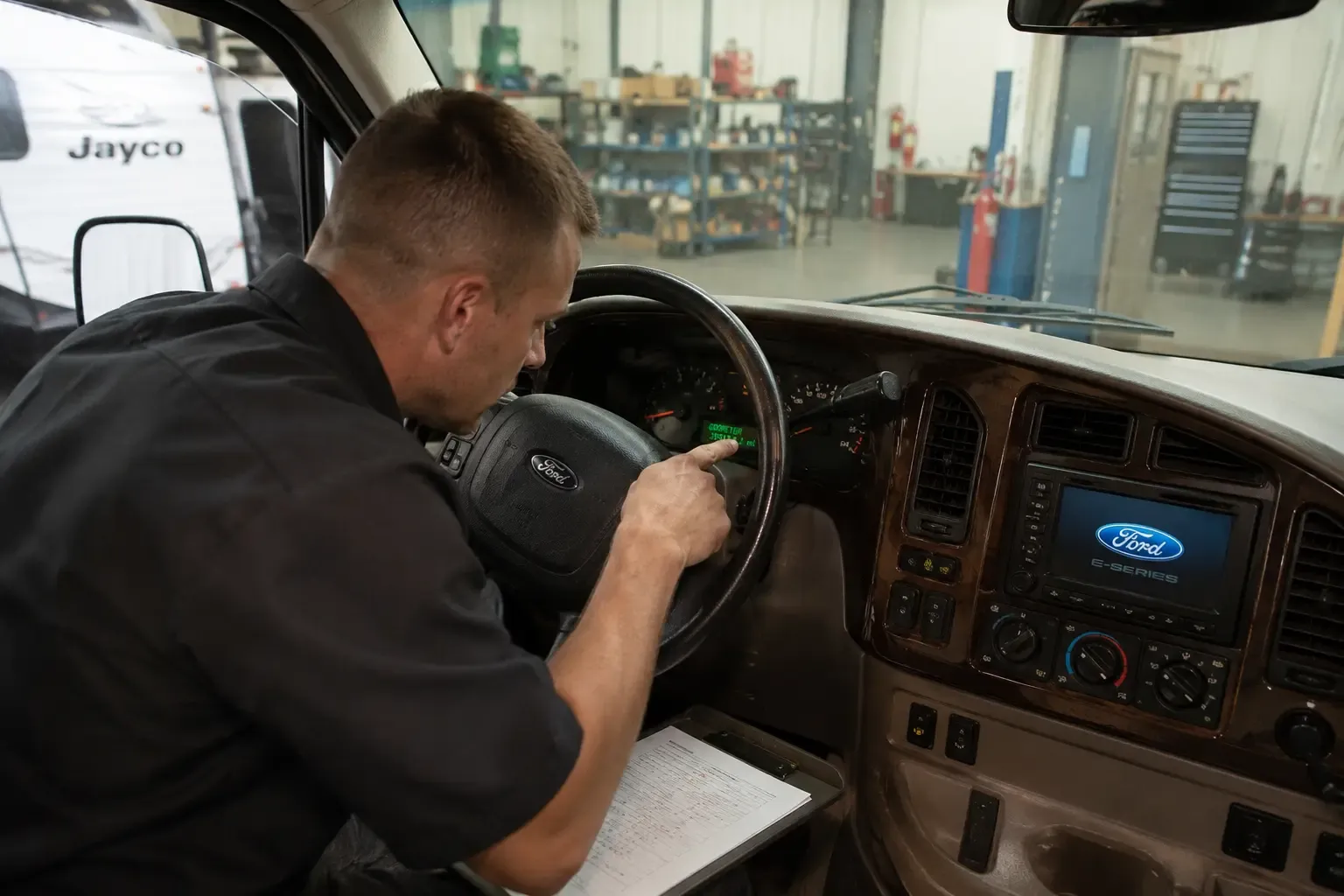
What Does RV Mileage Really Mean?
What Does RV Mileage Really Mean?
When shopping for a used motorhome, one of the first things buyers look at is mileage. A low number on the odometer can sound reassuring, while a higher number may make people hesitate.
But with RVs, especially diesel motorhomes, mileage does not tell the whole story.
A well-maintained diesel coach with 80,000 or even 120,000 miles can often be a better purchase than a low-mileage RV that has been sitting unused for years. The real condition of the coach depends on maintenance history, storage, service records, engine care, and how the RV was used.
Why Low Mileage Is Not Always Better
Many motorhomes are driven only a few thousand miles per year. That sounds good at first, but long periods of sitting can create problems.
An RV that has not been used regularly may develop issues with:
- Tires drying out or cracking
- Seals and gaskets becoming brittle
- Batteries losing charge or failing
- Fuel systems becoming contaminated
- Generators sitting unused for too long
- Slide-outs, leveling systems, and appliances needing attention
- Moisture or roof leaks going unnoticed
A motorhome with low mileage but poor maintenance can require more work than one with higher mileage that has been regularly serviced and exercised.
Diesel Motorhomes Are Built for Long Distance Travel
Diesel-powered Class A motorhomes are designed for highway travel and long-term use. Many use commercial-grade engines, transmissions, and chassis components built to handle significant mileage when properly maintained.
For a diesel motorhome, 50,000 to 100,000 miles is often not unusual. The most important factor is whether the RV has received regular oil changes, filter replacements, coolant service, transmission maintenance, generator service, and chassis inspections.
A diesel coach that has been properly maintained can provide many more years of reliable travel.
What Matters More Than Mileage
Instead of looking only at the odometer, buyers should consider the complete condition of the RV.
Maintenance Records
Service records are one of the best signs of responsible ownership. Look for documentation showing regular maintenance for the engine, generator, transmission, cooling system, batteries, brakes, and roof.
A coach with clear records is usually a safer choice than one with lower mileage but no maintenance history.
Storage History
Indoor storage can make a major difference. RVs stored inside are generally better protected from UV damage, moisture, weather exposure, roof deterioration, and fading exterior finishes.
A higher-mileage motorhome that has been stored indoors may be in better overall condition than a lower-mileage coach stored outside year-round.
Generator Hours
Generator hours matter almost as much as engine mileage. A generator that has been serviced regularly and run properly can be a good sign that the coach was used and maintained.
Buyers should ask when the generator was last serviced and whether it starts, runs smoothly, and powers the major systems in the RV.
Tire Age
Tires can look good even when they are old. RV tires should be checked for date codes, sidewall cracking, uneven wear, and proper inflation.
A low-mileage RV may still need new tires if the existing tires are several years old.
Water Damage and Roof Condition
Water intrusion is one of the biggest concerns with any RV. Buyers should inspect the roof, ceiling, windows, floor, storage bays, slide-outs, and corners for signs of moisture, staining, soft spots, or odors.
A clean, dry, well-maintained coach is usually more valuable than one with very low mileage but hidden water damage.
Overall System Condition
Mileage does not tell you whether the air conditioners, furnace, refrigerator, Aqua-Hot system, plumbing, leveling jacks, slide-outs, awnings, or electronics are working properly.
A full inspection should include all major systems, not just the engine.
What Is Considered High Mileage for an RV?
There is no single number that automatically makes an RV a bad purchase.
For a gas motorhome, buyers may become more cautious as mileage increases because gas engines are often used in lighter-duty applications.
For a diesel pusher motorhome, higher mileage is usually less concerning when the coach has been serviced correctly. A diesel engine with 80,000 or 100,000 miles may still have plenty of life left.
What matters most is how the RV has been cared for.
Questions Buyers Should Ask
Before purchasing a used RV, ask the seller or dealer:
- Do you have maintenance and service records?
- Has the RV been stored indoors or outdoors?
- When were the tires replaced?
- When was the generator last serviced?
- Has the engine and transmission been serviced recently?
- Are there any roof leaks, soft spots, or signs of water damage?
- Do all slide-outs, appliances, air conditioners, and leveling systems work?
- Has the RV been inspected recently?
- Are the batteries holding charge properly?
The Bottom Line
Mileage is important, but it should never be the only factor when buying a used motorhome.
A properly maintained diesel RV with higher mileage can be a dependable, comfortable coach for years to come. On the other hand, a low-mileage motorhome that has been neglected or stored improperly may bring expensive repairs.
The best RV purchase is not always the one with the lowest mileage. It is the one with the strongest maintenance history, clean condition, dry interior, reliable systems, and evidence of proper care.